• Skincare
  • Lifestyle
  • Products

Smart Touch-Ups: Your Summer Touch-Up Routine

Perfectly moisturized in the morning, but by noon your skin is already oily, sweaty, or just a little dull? We’ll tell you why touch-ups throughout the day are so important—and how you can do it easily with the right products, even adding a little extra glow.

Contents

WHY APPLYING CREAM ONCE ISN'T ENOUGH

No matter how good your morning SPF is, its protection doesn’t last forever. Sweat, water, and friction from clothing, towels, or even touching your face—all of these things break down the protective layer throughout the day. So if you apply sunscreen in the morning and don’t think about it for the rest of the day, you’re actually walking around in the afternoon with less protection than the label promises. That’s why you should reapply sunscreen regularly. The problem: Reapplying sunscreen over makeup is usually impractical—no one wants to wipe off their entire foundation at lunchtime in the office or at a café. This is exactly where powder with SPF comes in. It can be applied in seconds without ruining your look, and makes regularly refreshing your sunscreen throughout the day especially easy.

YOUR TOUCH-UP TOOL: DAILY DEFENCE SPF 30 POWDER

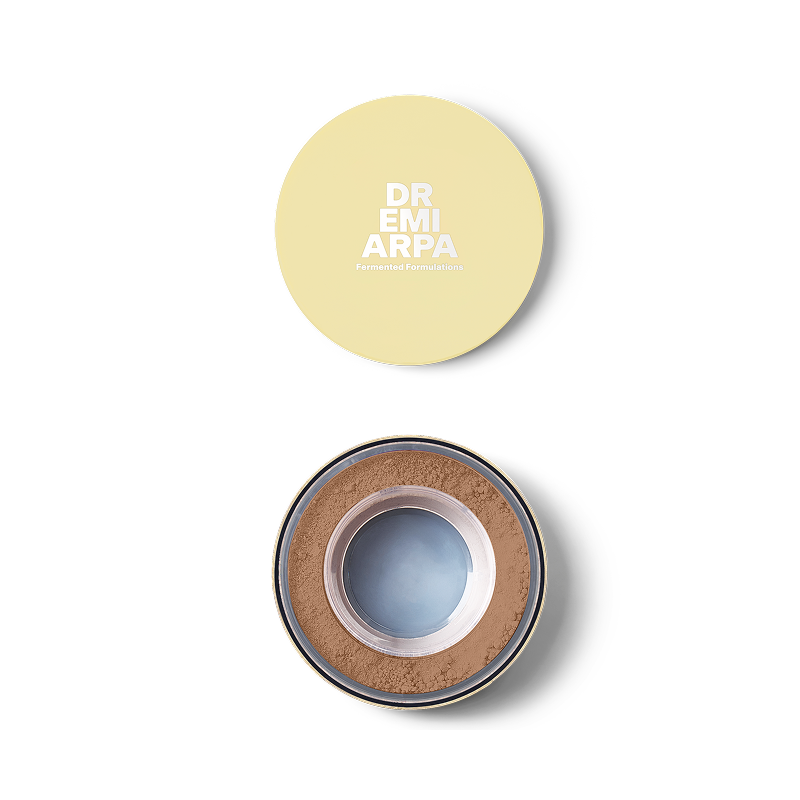
Touch up and protect. The Daily Defense SPF 30 Powder combines makeup with SPF: As the final step in your routine, it reliably sets your makeup, gently mattifies, and gives your skin an even, natural finish—without any “mask effect.” Your skincare glow remains, while shine disappears. With SPF 30 based on a mineral UV filter, vitamin E, and fermented camellia seed oil as a postbiotic, the powder protects against UV radiation and helps retain moisture and shield the skin from oxidative stress. This makes it ideal for easily reapplying sunscreen over makeup. The loose, semi-transparent powder comes in five versatile shades (Fair Light, Light Medium, Medium Tan, Tan Deep, Deep) and feels weightless. Thanks to the convenient powder compact with a dispensing system, it can be applied effortlessly and hygienically—even on the go or between meetings.

HOW TO USE YOUR POWDER PROPERLY

Apply the powder generously and evenly with a brush as the final step in your makeup routine to your face, neck, and décolletage. Reapply every 2–3 hours and as needed to maintain protection. Important to know: The SPF 30 Powder is a makeup product, not a standalone sunscreen. We do not recommend using it in place of sunscreen, as the powder alone does not provide sufficient sun protection. The powder should therefore always be worn in combination with sunscreen—for example, over our SPF Fluids—as a touch-up for when you’re on the go, not as a substitute for your morning sunscreen.

<p>SO NUTZT DU DEIN PUDER RICHTIG</p>

PRODUCT SPOTLIGHT: DAILY DEFENCE SPF 30 POWDER

More than just a powder: This formula combines UV protection and nourishing active ingredients with the performance of a setting powder. Mineral UV protection, antioxidant vitamin E, and fermented camellia seed oil come together in a silky-soft texture. The mineral UV filter zinc oxide provides broad-spectrum protection against UVA and UVB rays: While UVB radiation primarily causes sunburn, UVA radiation penetrates deeper into the skin and contributes to photoaging and UV-induced cell damage. 

Daily Defence SPF 30 Powder offers high UV protection. Postbiotics provide nourishing and antioxidant benefits. Vitamin E provides antioxidant and moisturizing benefits. Your daily touch-up on the go!

Daily Defence SPF 30 POWDER

  • SPF 30 provides high UV protection.
  • Postbiotics have nourishing and antioxidant properties .
  • Vitamin E has antioxidant and moisturizing properties .

Your daily touch-up on the go!

SUNKISSED GLOW: TAN TOUCH BRONZING SERUM

Touch-ups don’t have to just mean “replenishing protection”—they can also give you a glow boost. The Tan Touch Bronzing Serum, available in a universal shade, combines skincare with makeup for an instant bronzing effect—all without self-tanner. The liquid-creamy formula can be applied on its own, mixed with other products, or used sparingly. It blends seamlessly with the skin, delivering a natural finish with a blurring effect and providing both immediate and long-term hydration. The hyaluronic acid complex hydrates the skin and makes it appear plumper, while kombucha ferment helps refine the skin’s texture. Postbiotics and vitamin E provide moisturizing and antioxidant benefits. Clinically proven: Improved skin hydration immediately after application and significantly after 4 weeks.* Perfect for the afternoon, when your complexion loses some of its freshness due to sun exposure, air conditioning, or a long day at the office—just a few drops are enough for an instant refresh.

*Based on a 4-week clinical study involving 30 participants (men and women) aged 18–45.

YOUR MINI TOUCH-UP ROUTINE FOR ON THE GO

For anyone who doesn't have much time or space during the day, here's a 3-step refresh that fits in any purse:

  1. Blotting: If necessary, gently dab away excess shine with a piece of paper or a cloth; do not wipe.
  2. Add some glow: If you’d like, apply a few drops of Tan Touch Bronzing Serum—either on its own to your cheeks, forehead, and bridge of your nose, or mixed with a moisturizer—for a sun-kissed look. 
  3. Applying the powder: Apply the Daily Defense SPF 30 Powder evenly to your face, neck, and décolletage with a brush to refresh your sun protection and finish at the same time.

KEY TAKEAWAYS

Even the best sunscreen is useless if it wears off after two hours and no one remembers to reapply it. That’s why, for us, reapplying is just as much a part of our summer routine as applying it in the morning. The Daily Defense SPF 30 Powder makes exactly that easy: It sets your makeup, gently mattifies your skin, and refreshes your sun protection with a mineral UV filter, vitamin E, and postbiotics—important: always use it as a supplement, not a replacement for your sunscreen. For an extra glow throughout the day, the Tan Touch Bronzing Serum—with a hyaluronic acid complex, kombucha ferment, postbiotic, and vitamin E—provides clinically proven hydration and applies in seconds. Together, these two products form a smart, low-maintenance lineup for reapplying protection and a glow throughout the day.

Burke, K. E. (2007). Interaction of Vitamins C and E as More Effective Cosmeceuticals. Dermatologic Therapy, 20(5), 314–321.

Diffey, B. L. (2001). When should sunscreen be reapplied? Journal of the American Academy of Dermatology, 45(6), 882–885.

Wright, M. W., Wright, S. T., & Wagner, R. F. (2001). Mechanisms of sunscreen failure. Journal of the American Academy of Dermatology, 44(5), 781–784.

Haywood, R., Wardman, P., Sanders, R., & Linge, C. (2003). Sunscreens provide inadequate protection against ultraviolet-A-induced free radicals in the skin: Implications for skin aging and melanoma? Journal of Investigative Dermatology, 121(4), 862–868. 

Keen, M. A., & Hassan, I. (2016). Vitamin E in dermatology. Indian Dermatology Online Journal, 7(4), 311–315.

Fourtanier, A. (2001). Sunscreen products containing broad-spectrum UVB+UVA filters prevent cumulative photodamage induced by chronic, low-dose solar-simulated radiation. Photodermatology, Photoimmunology & Photomedicine, 17(4), 179–182. 

Kim, S., Jung, E., Shin, J. H., Kim, Y. S., Lee, J., & Park, D. (2012). Anti-inflammatory and skin-barrier-repair effects of Camellia japonica seed oil. Journal of Ethnopharmacology, 139(1), 209–215.

Kockler, J., Oelgemöller, M., Robertson, S., & Glass, B. D. (2012). Photostability of sunscreens. Journal of Photochemistry and Photobiology C: Photochemistry Reviews, 13(1), 91–110. 

Lin, F. H., Lin, J. Y., Gupta, R. D., Tournas, J. A., Burch, J. A., Selim, M. A., et al. (2005). Ferulic acid stabilizes a solution of vitamins C and E and doubles its photoprotective effect on the skin. Journal of Investigative Dermatology, 125(4), 826–832.

Osterwalder, U., & Herzog, B. (2009). Sun protection factors: Worldwide confusion. British Journal of Dermatology, 161(Suppl. 3), 13–24. 

Papakonstantinou, E., Roth, M., & Karakiulakis, G. (2012). Hyaluronic acid: A key molecule in skin aging. Dermato-Endocrinology, 4(3), 253–258.

Schalka, S., dos Reis, V. M. S., & Cucé, L. C. (2009). The influence of the amount of sunscreen applied and its sun protection factor (SPF): Evaluation of two sunscreens containing the same ingredients at different concentrations. Photodermatology, Photoimmunology & Photomedicine, 25(4), 175–180. 

Packer, L., & Valacchi, G. (2002). Antioxidants and the skin’s response to oxidative stress. Free Radical Biology and Medicine, 33(5), 571–582.

Masaki, Hitoshi (2010). The Role of Antioxidants in the Skin: Anti-Aging Effects. Journal of Dermatological Science, 58(2), 85–90.

Knackstedt, R., Knackstedt, T., & Gatherwright, J. (2020). The role of topical probiotics in skin conditions: A systematic review of animal and human studies. Journal of Dermatological Treatment, 31(4), 328–332.

Jayabalan, R., Malbaša, R. V., Lončar, E. S., Vitas, J. S., & Sathishkumar, M. (2014). A review of kombucha tea—Microbiology, composition, fermentation, beneficial effects, toxicity, and tea fungus. Comprehensive Reviews in Food Science and Food Safety, 13(4), 538–550.

Nizioł-Łukaszewska, Z., Ziemlewska, A., Zagórska-Dziok, M., Mokrzyńska, A., Wójciak, M., & Sowa, I. (2025). Apiaceae bioferments obtained by fermentation with kombucha as an important source of active substances for skin care. Molecules, 30, 983.

Burke, K. E. (2007). Interaction of Vitamins C and E as More Effective Cosmeceuticals. Dermatologic Therapy, 20(5), 314–321.

Diffey, B. L. (2001). When should sunscreen be reapplied? Journal of the American Academy of Dermatology, 45(6), 882–885.

Wright, M. W., Wright, S. T., & Wagner, R. F. (2001). Mechanisms of sunscreen failure. Journal of the American Academy of Dermatology, 44(5), 781–784.

Haywood, R., Wardman, P., Sanders, R., & Linge, C. (2003). Sunscreens provide inadequate protection against ultraviolet-A-induced free radicals in the skin: Implications for skin aging and melanoma? Journal of Investigative Dermatology, 121(4), 862–868. 

Keen, M. A., & Hassan, I. (2016). Vitamin E in dermatology. Indian Dermatology Online Journal, 7(4), 311–315.

Fourtanier, A. (2001). Sunscreen products containing broad-spectrum UVB+UVA filters prevent cumulative photodamage induced by chronic, low-dose solar-simulated radiation. Photodermatology, Photoimmunology & Photomedicine, 17(4), 179–182. 

Kim, S., Jung, E., Shin, J. H., Kim, Y. S., Lee, J., & Park, D. (2012). Anti-inflammatory and skin-barrier-repair effects of Camellia japonica seed oil. Journal of Ethnopharmacology, 139(1), 209–215.

Kockler, J., Oelgemöller, M., Robertson, S., & Glass, B. D. (2012). Photostability of sunscreens. Journal of Photochemistry and Photobiology C: Photochemistry Reviews, 13(1), 91–110. 

Lin, F. H., Lin, J. Y., Gupta, R. D., Tournas, J. A., Burch, J. A., Selim, M. A., et al. (2005). Ferulic acid stabilizes a solution of vitamins C and E and doubles its photoprotective effect on the skin. Journal of Investigative Dermatology, 125(4), 826–832.

Osterwalder, U., & Herzog, B. (2009). Sun protection factors: Worldwide confusion. British Journal of Dermatology, 161(Suppl. 3), 13–24. 

Papakonstantinou, E., Roth, M., & Karakiulakis, G. (2012). Hyaluronic acid: A key molecule in skin aging. Dermato-Endocrinology, 4(3), 253–258.

Schalka, S., dos Reis, V. M. S., & Cucé, L. C. (2009). The influence of the amount of sunscreen applied and its sun protection factor (SPF): Evaluation of two sunscreens containing the same ingredients at different concentrations. Photodermatology, Photoimmunology & Photomedicine, 25(4), 175–180. 

Packer, L., & Valacchi, G. (2002). Antioxidants and the skin’s response to oxidative stress. Free Radical Biology and Medicine, 33(5), 571–582.

Masaki, Hitoshi (2010). The Role of Antioxidants in the Skin: Anti-Aging Effects. Journal of Dermatological Science, 58(2), 85–90.

Knackstedt, R., Knackstedt, T., & Gatherwright, J. (2020). The role of topical probiotics in skin conditions: A systematic review of animal and human studies. Journal of Dermatological Treatment, 31(4), 328–332.

Jayabalan, R., Malbaša, R. V., Lončar, E. S., Vitas, J. S., & Sathishkumar, M. (2014). A review of kombucha tea—Microbiology, composition, fermentation, beneficial effects, toxicity, and tea fungus. Comprehensive Reviews in Food Science and Food Safety, 13(4), 538–550.

Nizioł-Łukaszewska, Z., Ziemlewska, A., Zagórska-Dziok, M., Mokrzyńska, A., Wójciak, M., & Sowa, I. (2025). Apiaceae bioferments obtained by fermentation with kombucha as an important source of active substances for skin care. Molecules, 30, 983.
FAQ

No, we do not recommend using the Daily Defense SPF 30 Powder in place of sunscreen, as the powder alone does not provide sufficient sun protection. The powder should therefore always be worn in combination with sunscreen—for example, over our SPF fluids. This is because the SPF 30 Powder is a makeup product—not a standalone sunscreen.

The effectiveness of sunscreen decreases significantly after about two hours—regardless of the SPF. Water, sweat, or friction can also cause the protection to wear off more quickly. Therefore, reapply every two hours and after swimming or drying off.

Apply the powder with SPF as the final step in your skincare routine or over your makeup to minimize any unwanted shine. To refresh your sunscreen or touch up your look throughout the day, simply reapply—it’s also ideal for on the go.

No, the Tan Touch Serum is a bronzing serum that does not contain self-tanner. The effect is created by color pigments and a subtle shimmer that blend with your skin. The advantage of this is that you get a washable tan that can be easily removed in the evening as part of your normal skincare routine.

Yes, absolutely. Thanks to its smooth, creamy texture, the serum provides a buildable tan. Depending on how many drops you use or whether you layer the product, you can vary the effect from a subtle hint to a more intense sun-kissed look.

Both products are suitable for all skin types—normal skin, dry skin, combination skin, and oily skin, as well as sensitive skin.