• Skincare
  • Lifestyle
  • Ingredients
  • Products

Skinification of Makeup: The Ultimate Summer Glow Guide

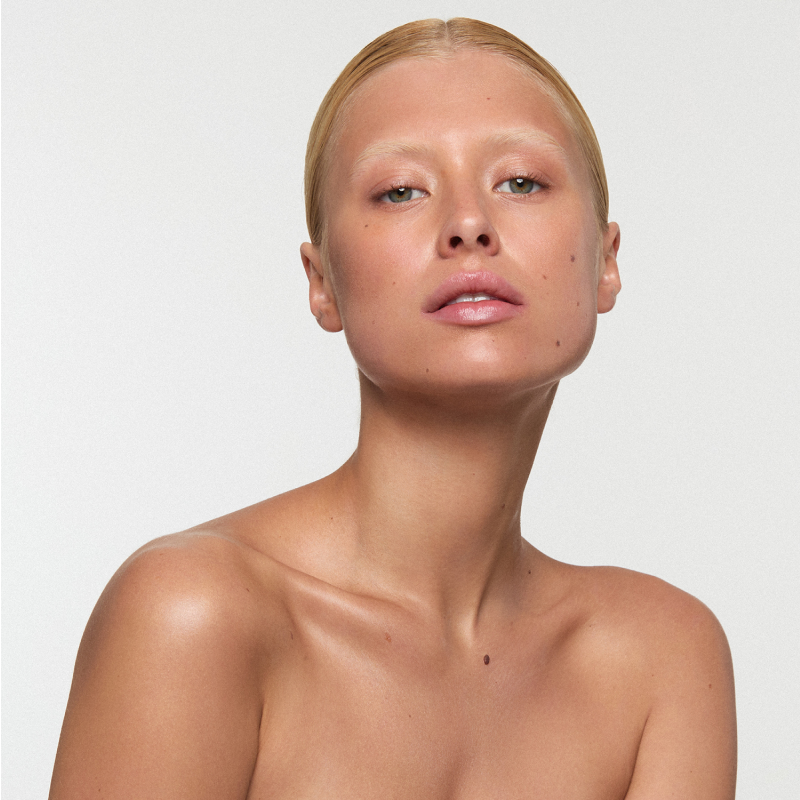
Skincare routine? Check. Glow? On. Makeup? Ready! A flawless look depends entirely on the right preparation, but even with the makeup itself, you can easily achieve maximum glow with just a few simple steps and the right products. We’ll show you how to create a summery “no-makeup” look with moisturizing formulas, smart sun protection, and clever multitasking hacks.

Contents

WHAT DOES "SKINIFICATION OF MAKEUP" ACTUALLY MEAN?

It used to be that skincare nourished the skin, while makeup provided coverage. Today, we know better. Our skin undergoes physiological changes in the summer: Higher temperatures and humidity stimulate sebum production, while UV radiation, salt water, and chlorinated water can strip the skin of moisture.  

Instead of clogging your pores with heavy primers and thick foundations—which make makeup look heavy and cakey—we rely on hybrid formulations. This is exactly where “Skinification of Makeup” comes in. Cosmetics shouldn’t mask skincare; they should complement it. At DR EMI ARPA SKIN, scientifically backed skincare and decorative cosmetics become one.

Our motto is: "Looks like makeup, works like skincare." We use formulas that support and hydrate your skin barrier while creating an even base for a minimalist, radiant finish.  

GET READY: YOUR STEP-BY-STEP ROUTINE FOR THE ULTIMATE SUMMER GLOW LOOK

Step 01: Base

Instead of heavy primers, the Hydra Hero Milky Drops are used. This moisturizing serum, containing 3% vegan kefir ferment, 8% pre- and postbiotics, and 5% panthenol, supports the skin barrier, provides intense hydration, and, with its ultra-light, milky texture, leaves the skin feeling balanced.

Step 02: SPF

Next, apply one of our iconic Daily Defense SPF Fluids. The formula, which contains modern broad-spectrum UV filters, protects against UVA and UVB rays and leaves a silky finish with a natural glow. The fluid should be allowed to absorb completely before applying makeup to ensure that the protection remains effective.

Step 03: Bronzer

The Tan Touch Bronzing Serum, available in a universal shade, combines skincare with makeup for an instant bronzing effect—without the need for self-tanner. Its serum-like texture blends seamlessly into the skin, creating a natural-looking, sun-kissed finish.

Step 04: Settings

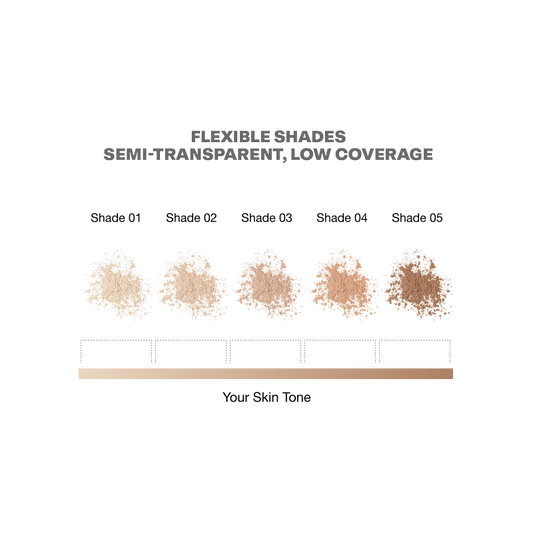
The Daily Defense SPF 30 Powder combines makeup with SPF: As the final step in your routine, it reliably sets your makeup, gently mattifies the skin, and gives it an even, natural finish. At the same time, the fine powder texture is ideal for easily refreshing your UV protection on the go without disrupting your makeup.

Step 05: Blush

For a natural, glowing blush look, DR EMI ARPA SKIN’s tinted lip tints also work well as a multi-use product. Dabbed onto the cheeks, they give you a fresh, radiant glow, while the same formula can also be used on the lips.

PRODUCT SPOTLIGHT: TAN TOUCH BRONZING SERUM

This bronzing serum for the face combines skincare and makeup to deliver an instant sun-kissed glow as well as immediate and long-lasting improvements in skin hydration. A universal shade with a subtle shimmer and a delicate, buildable tan without self-tanner—apply it pure, mixed, or spottily. For skin that looks like summer. 

Instant hydration for a plump and balanced-looking complexion. Clinically proven: Improved skin hydration immediately after application and significantly improved after 4 weeks.*

*Based on a 4-week clinical study involving 30 participants (men and women) aged 18–45.

Tan Touch Bronzing Serum 

  • Postbiotics have a moisturizing effect
  • Kombucha ferment for a more even-looking complexion and a radiant glow.
  • The hyaluronic acid complex has a moisturizing and plumping effect .
  • Vitamin E has antioxidant and moisturizing properties .

For skin that looks like summer!

<p>PRODUKT-SPOTLIGHT: TAN TOUCH BRONZING SERUM </p>

TIPS FOR YOUR ROUTINE ON HOT DAYS

  • Reapplication Is Key: Even the best sunscreen doesn’t last forever. Factors such as mechanical wear and tear or sweating break down the protective layer. Therefore, be sure to reapply every 2–3 hours. 
  • SPF x Antioxidants = Best Friends Forever: While SPF protects against UV rays, antioxidants protect the skin from oxidative damage caused by free radicals.
  • Cleanse: Especially in the summer, a thorough evening cleanse is essential for gently but effectively removing SPF residue, sweat, and sebum. 
  • Don't feel like lugging around heavy luggage? The Frequent Flyer Summer Routine is your go-to lineup for travel. In the transparent makeup bag, you'll find everything from a gentle cleanser to the Serious C Antioxidant Serum and SPF 50 fluid. Collect moments, not baggage!

KEY TAKEAWAYS

The “Skinification of Makeup” is your holy grail for hot days, when we swap heavy foundations for barrier-strengthening, feather-light hybrids. Your routine starts with the intensely hydrating Hydra Hero Milky Drops for plump-looking skin, followed by one of our protective Daily Defense SPF Fluids as an unbeatable base. The clinically proven Tan Touch Bronzing Serum ensures a perfect, sun-kissed glow, while the Daily Defense SPF 30 Powder gently mattifies shiny areas and refreshes UV protection over your makeup on the go. The look is rounded out with our multi-use Lip Tints on the cheeks.  

Emi's Golden Rule for hot days: Since sweat and friction break down your protective barrier, reapplying every 2–3 hours (for example, with our SPF powder) is an absolute must—and in the evening, a thorough, gentle cleansing reliably removes SPF residue and sebum from your pores!

BASF Personal Care. (n.d.). The Skin's Natural Protection. Retrieved June 10, 2025, from https://www.personal-care.basf.com/core-competencies/alles-%C3%BCber-sonne/haut-hauttypen/der-eigenschutz-der-haut

BASF Personal Care. (n.d.). What Exactly Are SPF, LSF, and Others? Retrieved June 10, 2025, from https://www.personal-care.basf.com/core-competencies/alles-%C3%BCber-sonne/sonnenschutz/was-genau-ist-dieses-spf-lsf-co

Federal Office for Radiation Protection (BfS). (2025). UV Protection with Sunscreen. Retrieved May 19, 2025, from https://www.bfs.de/EN/topics/opt/uv/protection/sunscreen/sunscreen_node.html

Federal Office for Radiation Protection (BfS). (n.d.). Disinfection with UV-C Radiation. Retrieved June 4, 2025, from https://www.bfs.de/DE/themen/opt/anwendung-alltag-technik/uv/uv-c-strahlung/uv-c-desinfektion_node.html 

Federal Office for Consumer Protection and Food Safety (BVL). (n.d.). Sunscreen Products—Requirements and Labeling. Retrieved June 4, 2025, from https://www.bvl.bund.de/DE/Arbeitsbereiche/03_Verbraucherprodukte/02_Verbraucher/03_Kosmetik/06_Sonnenschutzmittel/bgs_kosmetik_sonnenschutzmittel_node.html

Busch, L., Kröger, M., Zamudio Díaz, D. F., Schleusener, J., Lohan, S. B., Ma, J., Witzel, C., Keck, C. M., & Meinke, M. C. (2023). Far-UVC- and UVB-induced DNA damage depending on skin type. Experimental Dermatology, 32(9), 1582–1587. 

Callewaert, C., Ravard Helffer, K., & Lebaron, P. (2020). The skin microbiome and its interaction with the environment. American Journal of Clinical Dermatology, 21(Suppl. 1), 4–11.

Fajuyigbe, D., & Verschoore, M. (2021). Sun exposure and Black skin. In Current Problems in Dermatology (Vol. 55, pp. 62–71).

Fitzpatrick, T. B. (1988). The validity and practicality of sun-reactive skin types I through VI. Archives of Dermatology, 124(6), 869–871.

Gupta, V., & Sharma, V. K. (2019). Skin typing: Fitzpatrick grading and others. Clinics in Dermatology, 37(5), 430–436.

Jayabalan, R., Malbaša, R. V., Lončar, E. S., Vitas, J. S., & Sathishkumar, M. (2014). A review of kombucha tea—Microbiology, composition, fermentation, beneficial effects, toxicity, and tea fungus. Comprehensive Reviews in Food Science and Food Safety, 13(4), 538–550.

Knackstedt, R., Knackstedt, T., & Gatherwright, J. (2020). The role of topical probiotics in skin conditions: A systematic review of animal and human studies. Journal of Dermatological Treatment, 31(4), 328–332.

Lim, S. S., Mohammad, T. F., Kohli, I., Hamzavi, I., & Rodrigues, M. (2023). Optimization of skin phototype classification. Pigment Cell & Melanoma Research, 36(6), 468–471. 

Masaki, Hitoshi (2010). The Role of Antioxidants in the Skin: Anti-Aging Effects. Journal of Dermatological Science, 58(2), 85–90.

Neale, R. E., Khan, S. R., Lucas, R. M., Waterhouse, M., Whiteman, D. C., & Olsen, C. M. (2019). The effect of sunscreen on vitamin D: A review. British Journal of Dermatology, 181(5), 907–915. 

Nizioł-Łukaszewska, Z., Ziemlewska, A., Zagórska-Dziok, M., Mokrzyńska, A., Wójciak, M., & Sowa, I. (2025). Apiaceae bioferments obtained by fermentation with kombucha as an important source of active substances for skin care. Molecules, 30, 983.

Packer, L., & Valacchi, G. (2002). Antioxidants and the skin's response to oxidative stress. Free Radical Biology and Medicine, 33(5), 571–582.

Papakonstantinou, E., Roth, M., & Karakiulakis, G. (2012). Hyaluronic acid: A key molecule in skin aging. Dermato-Endocrinology, 4(3), 253–258.

Rinnerthaler, M., Bischof, J., Streubel, M. K., Trost, A., & Richter, K. (2015). Oxidative stress in aging human skin. Biomolecules, 5(2), 545–589.

Rittié, L., & Fisher, G. J. (2015). Natural and sun-induced aging of human skin. Cold Spring Harbor Perspectives in Medicine, 5(1).

Roberts, W. E. (2009). Skin type classification systems: old and new. Dermatologic Clinics, 27(4), 529–533.

Shank, R. C., Slaga, T. J., Snyder, P. W., Tilton, S. C., & Panel, P. D. P. (n.d.). Safety assessment of radish root-derived ingredients as used in cosmetics.

Sultana, R., McBain, A. J., & O’Neill, C. A. (2013). Strain-dependent enhancement of tight-junction barrier function in human primary epidermal keratinocytes by Lactobacillus and Bifidobacterium lysates. Applied and Environmental Microbiology, 79(16), 4887–4894.

Tewari, A., Grage, M. M. L., Harrison, G. I., Sarkany, R., & Young, A. R. (2013). UVA1 runs deep: Molecular and clinical implications. Photochemical & Photobiological Sciences, 12(1), 95–103.

Trevithick, J. R., Xiong, H., Lee, S., Shum, D. T., Sanford, S. E., Karlik, S. J., Norley, C., & Dilworth, G. R. (1992). Topical tocopherol acetate reduces post-UVB, sunburn-associated erythema, edema, and skin sensitivity in hairless mice. Archives of Biochemistry and Biophysics, 296(2), 575–582.

FAQ

The Tan Touch Bronzing Serum is a hybrid product that combines the benefits of skincare with the visual effects of a bronzer. Unlike traditional makeup, this bronzing serum for the face nourishes the skin with hyaluronic acid and vitamin E while providing a radiant finish.

This product offers maximum flexibility: For an all-over glow, you can mix a few drops directly into a moisturizer or into DR EMI ARPA SKIN’s Milky Drops. If you want more definition, you can also use the Bronzing Serum on its own to add targeted bronzy highlights, for example on your cheeks, nose, and forehead.

The effectiveness of sunscreen wears off after about two to three hours—regardless of the SPF. Water, sweat, or friction can also cause the protection to wear off more quickly. Therefore, reapply every two hours and after swimming or drying off.

Applying it just once isn't enough. For optimal protection, apply sunscreen generously 15–30 minutes before going out in the sun, and reapply every two hours and after contact with water or a towel.

Here’s a handy tip: You can also reapply your liquid SPF over your makeup! To do this, put a little fluid on the back of your hand and gently press the product onto your skin with your palms. This way, your foundation stays in place while your UV protection is reactivated.