• Ingredients
  • Skincare
  • Products

Retinal as a "well-aging" active ingredient for skin health

Skincare with retinal—spelled with an “a” instead of an “o”—is better than retinol. The effectiveness of this form of vitamin A against signs of aging and skin imperfections is backed by evidence, especially when it’s in encapsulated form. DR. EMI ARPA SKIN tells you everything you need to know about how retinal works and how to use it in skincare products.

Contents

WHAT IS RETINAL?

Retinaldehyde, better known as retinal, is a vitamin A derivative(retinoid). Retinal is a natural precursor to retinoic acid. Unlike retinol, it therefore requires only a single conversion step to be oxidized into its active form. According to recent studies, retinal is considered the most effective over-the-counter retinoid, offering an optimal balance of efficacy and tolerability.

<p>WAS IST RETINAL?</p>

Evidence-Based Mechanisms of Action of Retinal on the Skin

Retinal is a very well-tolerated anti-aging ingredient that helps reduce the signs of skin aging (especially those caused by UV radiation). 

Concentrations of 0.05% retinal or higher for external (topical) use:

  • reduce wrinkle depth
  • promote collagen synthesis
  • increase skin elasticity
  • improve skin texture
  • unclog the pores
  • have an antibacterial effect
  • inhibit collagen breakdown
  • refine the pores
  • increase skin thickness and make the skin more resilient
  • Reduce hyperpigmentation (starting at 0.1% retinal)

WHAT IS THE DIFFERENCE BETWEEN RETINAL AND ENCAPSULATED RETINAL?

The retinal in the DR. EMI ARPA SKIN Absolute A and Absolute A+ serums is present as an active ingredient encapsulated in liposomes. This encapsulation technique is used for several reasons: to protect the retinal and preserve its stability and efficacy. This is because retinal is sensitive to light and air, which can cause it to oxidize and thus reduce its efficacy. Encapsulation protects retinal from these environmental factors and preserves its stability. As a result, products containing encapsulated retinal have a longer shelf life, and their effectiveness is better preserved compared to those containing non-encapsulated retinal. Furthermore, encapsulated retinal can be delivered to the skin in a more targeted manner, which enhances its effectiveness: The capsule ensures that the active ingredients of the retinal only take effect after penetrating the skin. Another advantage of encapsulated retinal is that it tends to be less irritating to the skin than non-encapsulated retinal.

Can Retinal be used during pregnancy or while breastfeeding?

All forms of retinoids (retinol/retinal) should generally be avoided during pregnancy and while breastfeeding, as they may have adverse effects during pregnancy and/or while breastfeeding.

Fewer Side Effects with (Encapsulated) Retinal

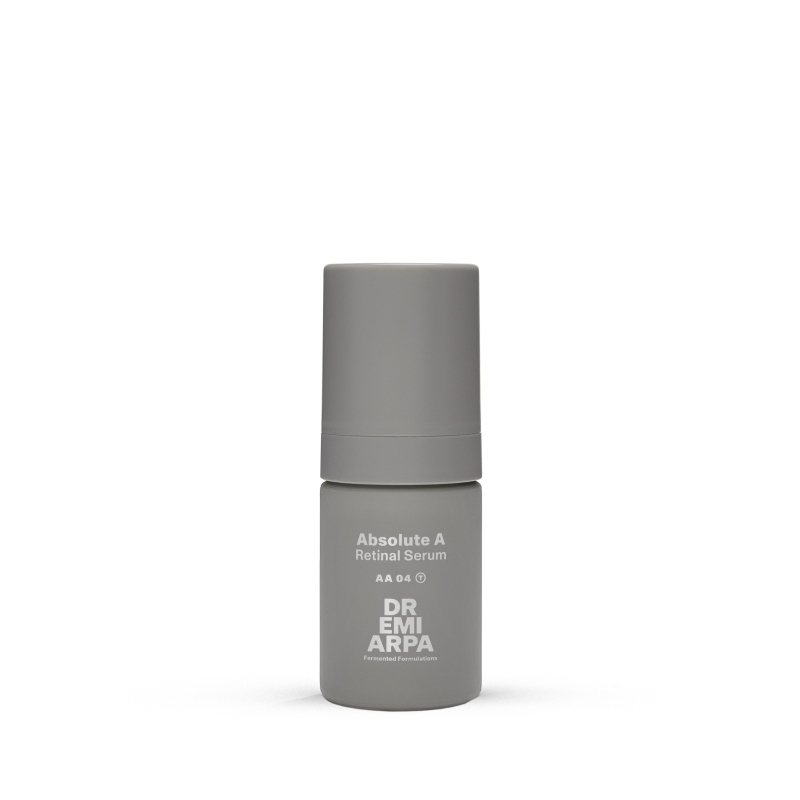
Because retinoic acid is delivered in a controlled manner in the form of retinal, retinal is generally better tolerated. Encapsulated retinal, in particular, tends to irritate the skin less than non-encapsulated retinal, which is beneficial for those with sensitive skin who wish to enjoy the aforementioned benefits of this active ingredient. People with sensitive skin or skin prone to redness should start with a lower application frequency and concentration of retinal—for example, with the Absolute A Retinal Serum by DR. EMI ARPA SKIN.

WHEN SHOULD RETINAL BE USED?

Depending on skin condition and treatment goals, retinoids can address a wide range of skin concerns. Retinal improves skin texture—and thus skin quality—by stimulating collagen synthesis. Retinal has this effect like no other active ingredient in skincare; on the one hand, it helps improve the skin’s appearance: pores become finer, the skin texture is smoothed, and pigmentation spots are reduced. On the other hand—or rather, precisely because of this effect—retinal also serves as an excellent active ingredient against aging processes and sun damage. Retinal thus accelerates cell division, stimulates collagen synthesis, and promotes skin elasticity, among other benefits. These factors slow down or diminish as we age. Retinal’s cell-dividing and comedolytic, antibacterial properties also have positive effects on skin prone to blemishes.

As a dermatologist, Dr. Emi Arpa recommends incorporating retinoids (retinol/retinal) into your evening skincare routine. Applying them in the evening has the advantage that skincare products containing retinal—such as the DR. EMI ARPA SKIN Absolute A and Absolute A+ serums—can optimally support skin regeneration and work undisturbed. In the morning, retinal’s antioxidant properties protect the skin from the harmful effects of free radicals. Additionally, the high light sensitivity of the high-dose retinoids used in these products must be taken into account. A must when using retinal products: UV protection during the day—ideally with SPF 50.