


AT A GLANCE
SPF stands for “Sun Protection Factor” and is the abbreviation for Lichtschutzfaktor (LSF) in German, also known as the sun protection factor. The SPF describes how much longer you can theoretically stay in the sun with sunscreen without getting sunburned, compared to unprotected skin. The sun protection factor is calculated using the following formula:
SPF × skin’s natural protection time = theoretical protection time
For example, if your skin shows the first signs of sunburn after ten minutes without protection, a properly applied SPF 50 provides up to 500 minutes of protection according to this calculation. But be careful: This calculation is based on standardized laboratory conditions—in reality, many other factors come into play. Also: This calculation focuses on sunburn. Other long-term damage isn’t taken into account, even though our skin doesn’t forget it. Resulting consequences, such as premature skin aging or skin cancer, can manifest years later and then become acute. In other words: Skin damage can occur even without sunburn.
What sun protection factor do I need: SPF 50 or 30?
The sunprotection factor (SPF) indicates how well a product protects against UVB radiation. The higher the SPF, the greater the level of protection. A distinction is made between different protection categories. The following SPF table shows you how SPF values and UVA protection can be categorized.
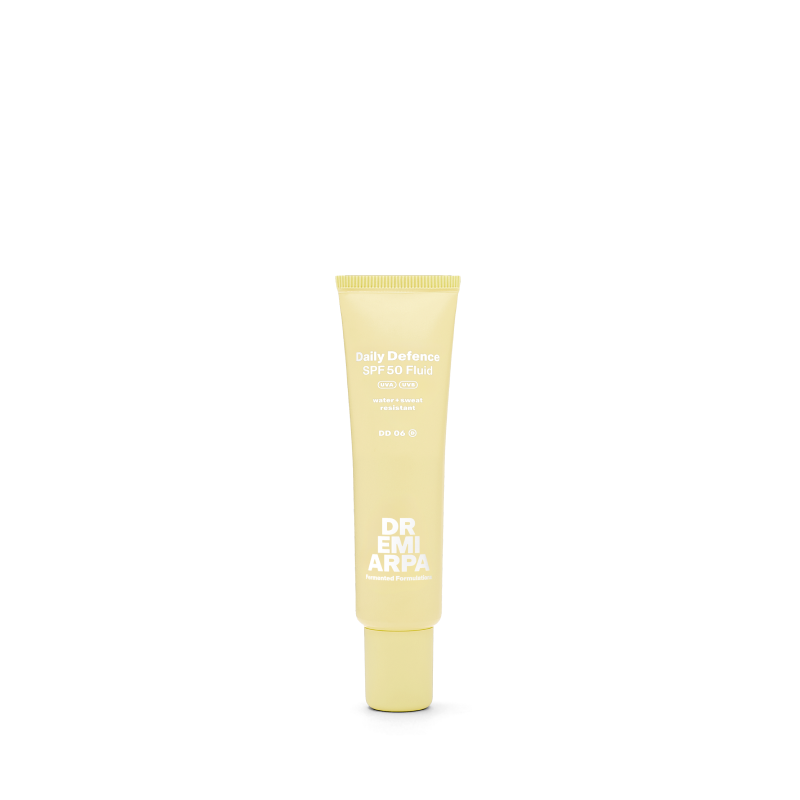
Both the Daily Defense SPF 30 Fluid and the SPF 50 Fluid from DR. EMI ARPA SKIN fall into the “High Protection” category, meaning they provide high sun protection for the skin. They help prevent UV-related skin damage such as sunburn. A general guideline for everyday use: Sunscreen with SPF 30 or SPF 50 is always recommended; the SPF depends on the situation and your skin type. While products with SPF 100 do exist, they are not commonly used because even sunscreens with the highest SPF cannot filter out all UV radiation. According to the European Commission, claims such as “100% protection” or “sunblock” are considered misleading and may not be used, as they convey a false sense of security. Sunscreens must also carry clear warnings stating that 100 percent protection is not possible. These warnings are intended to make it clear to consumers that additional precautions—such as avoiding intense sunlight—are still necessary.
Reapplying Sunscreen = Maintaining Protection, Not Extending It
It is essential that sunscreens be reapplied regularly. The statement “Reapplying sunscreen does not extend the duration of protection” therefore sounds contradictory at first. The duration of protection is determined once and for all by the sun protection factor (SPF) multiplied by the skin’s natural protective capacity. And here’s where it gets interesting: It isn’t extended by reapplying, because this only serves to maintain the protection. Daily sunscreen is worn off or reduced by sweat, water, mechanical friction (e.g., clothing, towels), or incomplete application. Over time, the effective protective effect decreases, even if the theoretical duration of protection hasn’t yet been reached.
- A high SPF is important, but it's only one part of effective sun protection
- Reapplying lotion does not extend the duration of protection; rather, it maintains it.
- Sun protection is recommended for all skin types—regardless of the skin's natural protection time
- UVA rays cause skin aging; UVB rays cause sunburn → Protection against both is essential