


WHAT IS HYALURONIC ACID?
Don’t let the “-acid” ending put you off: hyaluronic acid is generally well tolerated. It is a naturally occurring substance that is also found in the body and plays a crucial role in various tissues—especially in the skin. This clear, gel-like substance is also found in joints, eyes, and other connective tissue structures.
Good to know:
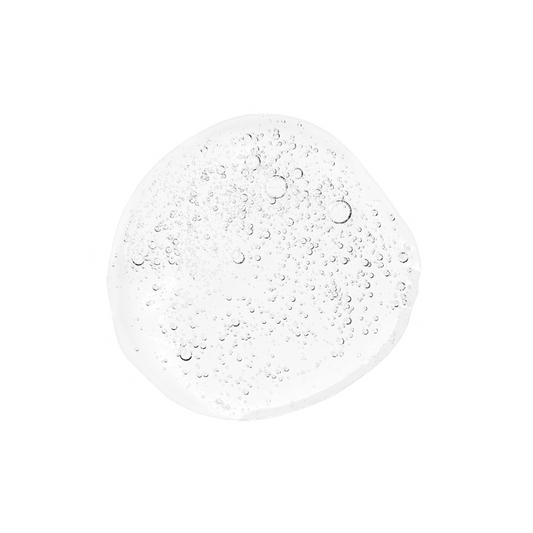
When hyaluronic acid absorbs water, it becomes transparent. Fittingly, its name is derived from “hyalos,” the Greek word for glass.
Hyaluronic acid in the skin
Hyaluronic acid is a natural component of the skin and has the unique ability to bind large amounts of water—roughly a thousand times its own weight. This makes it an excellent moisture reservoir, giving the skin a plump appearance.
Its role in the skin goes even further: hyaluronic acid acts as a “lubricant” between the skin’s collagen and elastic fibers, which are responsible for firmness and elasticity. It thus ensures that the skin can maintain its elasticity even when moving or stretching.
Hyaluronic Acid: Function and Effects on the Skin
The term “hyaluron” is often used colloquially. Furthermore, hyaluron is frequently marketed as a miracle cure for the skin—but scientifically, it does not exist as a single substance; the correct term is “hyaluronic acid.” It is a popular ingredient in skincare products such as face creams and serums because: As we age, the body’s production of it decreases—resulting in reduced skin moisture and potential dryness-related wrinkles. Hyaluronic acid acts as a moisture reservoir and can make the skin appear plump and elastic—a visual reduction in wrinkles is possible with hyaluronic acid, but it is not a traditional anti-aging ingredient. Hyaluronic acid is not an antioxidant in the traditional sense, but it can indirectly help reduce oxidative stress by strengthening the skin barrier and binding water. Hyaluronic acid, along with lipids, natural moisturizing factors (NMFs), sebum, and aquaporins, among the substances responsible for moisture in the skin. As the main component of the extracellular matrix—the network that supports our skin cells—hyaluronic acid plays a crucial role in keeping the skin hydrated. It acts as a moisture reservoir in conjunction with NMFs. These are a group of substances—such as amino acids, lactic acid, and urea, as well as other smaller molecules—found in the outer layer of the skin that strengthen the skin barrier and bind moisture. They form a natural moisture film on the skin.
What are NMFs?
Natural moisturizing factors (NMFs) are a group of substances that occur naturally in the outer layer of the skin (stratum corneum) and are crucial for maintaining the skin’s healthy moisture levels and barrier function. They bind water from the environment and retain it in the skin. NMFs include, for example, amino acids and their derivatives, lactic acid, glycerin, and urea.